Delyna: A Romantic Handwritten Font for Sweet Branding
I was staring at a blank brand board last Tuesday, trying to solve a visual identity problem for a small boutique that sells handmade soaps and bath salts. The client wanted something that felt intimate, organic, and undeniably sweet without tipping over into the cheesy. I had already cycled through three different sans serif options and two heavy serif fonts, but none of them captured the "hand-poured" warmth we were aiming for. That is when I decided to test Delyna. As soon as I typed the shop name into my layout software, the little hearts appearing as ornaments in the letterforms instantly shifted the mood of the entire project.
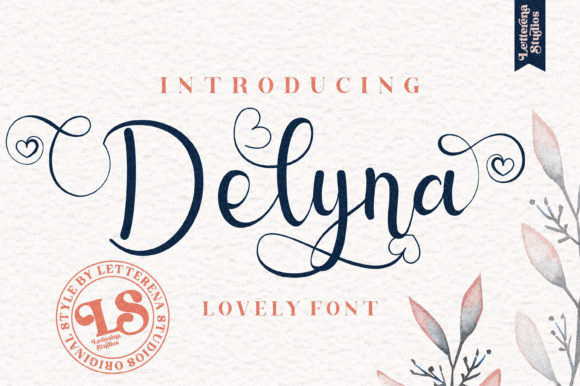
Delyna is not just another script font; it is a romantic handwritten typeface designed with specific intent. It features delicate strokes and those signature heart-shaped details that act as subtle punctuation. In this review, I want to walk you through how this font performed across various design assets, from logo drafts to packaging mockups, and help you decide if it fits your next creative project.
First Impressions: Testing Delyna on a Logo Concept
The first place any designer tests a new typeface is the logo mark. For this boutique project, I needed a wordmark that looked like it could have been written by the artisan herself. When I applied Delyna, the flow was immediate. The handwritten style feels fluid and natural, avoiding the rigid perfection of many digital scripts. The heart ornaments are the standout feature here; they don't feel tacked on but rather integrated into the rhythm of the writing.
However, there is a nuance to consider. Because Delyna is PUA encoded (Private Use Area), it relies on specific character mapping to render those special glyphs correctly. In my testing within Adobe Illustrator, I had to ensure I was using the correct version of the file to access all the alternates and swashes. Once set up, the result was a logo draft that felt premium yet approachable. It immediately communicated a sense of care and affection, which is exactly what a skincare or gift brand needs to convey.
From Paper to Screen: Packaging and Digital Applications
After nailing the logo, I moved on to the physical application. I placed the Delyna typeface onto a packaging mockup for a soap label. At a medium size, the font shined. The contrast between the thick and thin strokes gave it an elegant, calligraphic quality that worked beautifully against the matte finish of the paper texture I was simulating. The little hearts added just enough whimsy to make the product stand out on a shelf crowded with minimalist competitors.
Next, I tested it in a web design context, specifically for a homepage hero section. Here, the limitations of a display font become apparent. While Delyna looks stunning as a headline or a short tagline like "Handcrafted with Love," it struggles with longer blocks of text. The intricate details and varying stroke widths can reduce readability if used for paragraphs. This is a crucial observation for any brand designer: Delyna is best utilized as a decorative accent or headline font, not a body typeface.
On social media graphics, however, it was a powerhouse. I created an Instagram story template using the font for event announcements and promotional offers. The romantic personality of the font translated perfectly to the vertical format, catching the eye of the viewer immediately. It felt personal, like a direct message from the brand owner, which is highly effective for engagement in the lifestyle and craft niches.
Strategic Pairing: Balancing Script with Structure
One of the most common mistakes designers make with romantic script fonts like Delyna is letting them dominate the entire visual hierarchy. To create a professional brand identity, you need balance. In my case study, I paired Delyna with a clean, geometric sans serif font for the supporting information. The stark, modern lines of the sans serif provided a stable foundation that allowed the flowing curves and hearts of the script to breathe.
If you are looking for a more traditional look, a high-contrast serif font can also work well, creating a classic editorial vibe suitable for wedding invitations or luxury stationery. The key is to let Delyna do the emotional heavy lifting while your secondary typeface handles the informational load. This combination ensures that your design assets remain legible while maintaining that sweet, handcrafted aesthetic.
When to Hold Back: Limitations and Suitability
While Delyna is a fantastic tool for specific projects, it is not a universal solution. If you are designing a corporate report, a legal document, or a technical manual, this font is likely the wrong choice. Its decorative nature and the inclusion of heart ornaments make it too informal for serious, data-heavy contexts. Similarly, avoid using it for small print sizes on business cards or fine print on packaging labels, as the details may get lost or appear muddy when printed at low resolutions.
It is also worth noting that because it is a specialized script font, it requires careful kerning and spacing adjustments. Unlike standard typefaces where the default spacing is usually sufficient, Delyna often benefits from manual tweaking to ensure the letters connect naturally and the heart ornaments don't crowd the surrounding text.
Practical Advice for Using Delyna in Client Work
Before committing to Delyna for a final client deliverable, always run a comprehensive test. Check the font's multilingual support if your client operates internationally, though PUA encoded fonts sometimes have limited character sets outside of Latin scripts. Verify the file formats included in your download—ensuring you have both OTF/TTF for desktop use and WOFF/WOFF2 for web integration if you plan to embed it in a website.
Most importantly, review the licensing terms. Since Delyna is a commercial font, you must ensure you have the appropriate license for your intended use. Are you creating a logo for a client? You will likely need an extended license. Are you selling templates or merchandise featuring the font? The standard license might not cover that. Always clarify these details with the foundry or seller to protect yourself and your clients legally.
In conclusion, Delyna is a delightful addition to any designer's toolkit, particularly for projects requiring a touch of romance and warmth. Whether you are branding a Valentine's Day campaign, designing a wedding suite, or refreshing the identity of a local bakery, its unique blend of handwritten charm and ornamental detail can elevate your work. Just remember to use it strategically as a display element, pair it wisely, and respect its limitations to achieve the best results.